Make the most out of your potential: the benefits of single-pass sideband KPFM




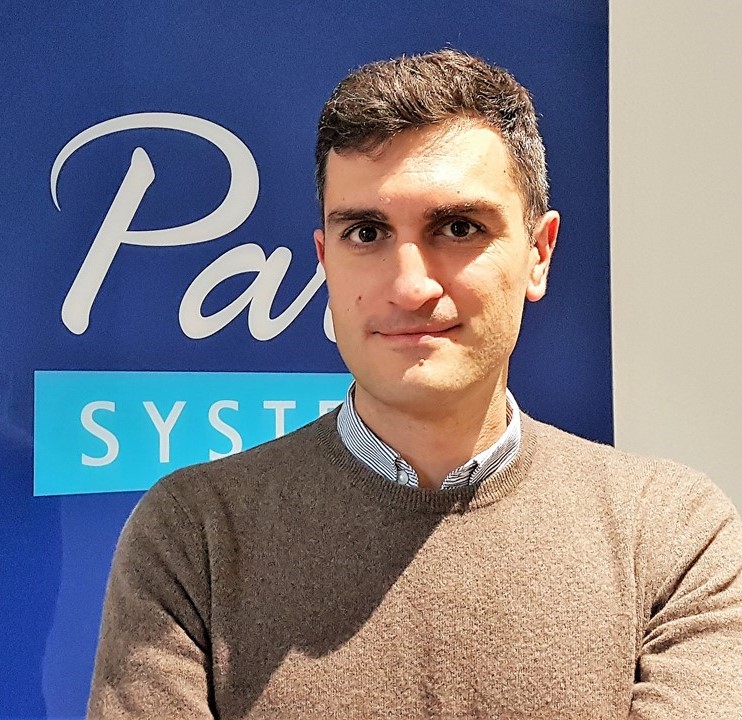
Principal Scientist at Park Systems Europe
Dr. Andrea Cerreta is an Application Scientists at Park Systems Europe, where he focuses on application development and support for the academic sector. He received his Ph.D. in Physics from the Ecole Polytechnique Fédérale de Lausanne (EPFL), Switzerland. He did his further doctoral work at the Solid State Physics Group of Université de Fribourg, Switzerland, which focused on studying electrical and magnetic properties of organic spin valves and spin polarized currents in superconducting materials, grown by means of Pulsed Laser Deposition, and characterizing the DC and AC transport properties of magnetic and superconducting samples. His expertise also spans the Frequency Modulation Atomic Force Microscopy in UHV for the study of biomolecules.


Abstract:
Atomic Force Microscopy (AFM) has become an essential tool for research in a large range of fields of sciences. AFM provides higher resolution when compared to other microscopy techniques. Its applicability on the most diverse samples makes it the ideal instrument to explore properties of materials at their interfaces, to study biological material and processes, and to understand fundamental properties of condensed matter.
Due to its high performance in terms of resolution, AFM is largely used to perform structural and topographical characterization. Nevertheless, there is much more than just topography under an AFM tip. Once brought close to the sample, the AFM probe is sensitive to a series of interactions which depend on local properties of the material under inspection. It is possible to prepare AFM experiments in such a way that quantitative data about these properties can be collected, empowering the researcher with a set of new and exciting information to link with topography.
Among the advanced modes AFM is capable of, Kelvin Probe Force Microscopy (KPFM) allows retrieving data on the electrical potential at the sample surface. KPFM is then the ideal local probe technique to correlate structural features and material composition of the observed sample with the variation of such potentials, with possible applications in many different fields like nano- and optoelectronics, metal corrosion and energy storage.
Park Systems has implemented single-pass sideband KPFM by default in all research tools of its NX series. This advanced mode enables users to perform highly precise, quantitative mapping of the potential distribution at the same time than topography.
In this course, we will show details and advantages of the KPFM technique, together with a demonstration of its ease of use.